Data Science

Crash Course on Input-Output Model Mathematics
Reading Time: 1 min.
Graphic

Summary

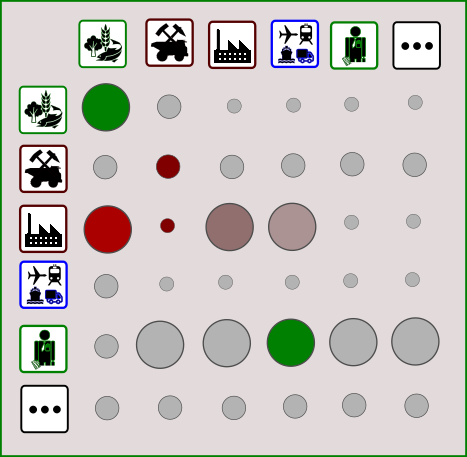
A brief review of the linear algebra and matrix theory concepts underpinning standard environmentally extended input-output models.

Content

This brief introduction in Input-Output Model mathematics discusses the basic elements of linear algebra that are necessary to understand the standard Input-Output models, including their Environmental impact extensions.

Matrix theory is the main subject covered here as it is the most dominant mathematical tool used in this area (though other parts of mathematics do find applications in Input-Output analysis). The focus is on the notation and mathematical objects commonly used, not the economic interpretation or any mathematical proofs.
Mathematical Representations of Credit Portfolio Data

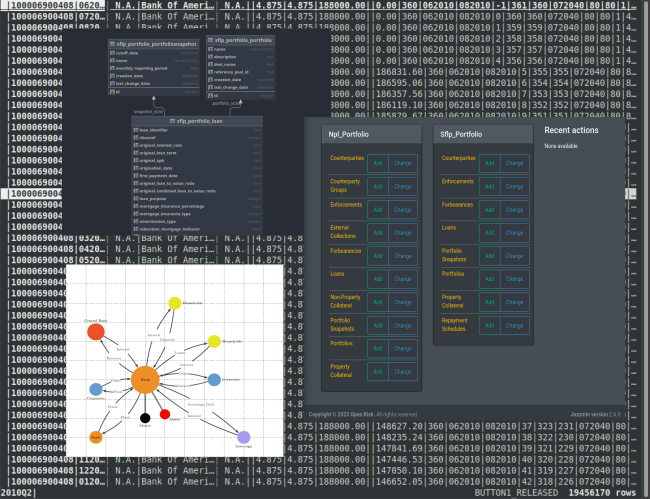
Mathematical Representations of Credit Portfolio Data

What do we mean by credit data? This post is a discussion around mathematical terminology and concepts that are useful in the context of working with credit data, taking us from network graph representations of credit systems to commonly used reference data sets

Reading Time: 1 min.

Course Objective

Digging into the meaning of credit data collections, the logic that binds them together towards understanding what they can be used for and what limitations and issues they may be affected by, this new course in the Credit Portfolio Management category explores a new angle to look at an old practice.

21 Ways to Visualize a Timeseries

Reading Time: 3 min.

What this course is about (and what it isn’t)

With the ever more widespread adoption of Data Science tools (defined loosely as the intensive use of data in decision-making), there is strong interest in Visualization as an effective means for humans to understand information at various stages of the data lifecycle.

There is a large variety of open source data visualization tools which can produce an ever more bewildering variety of visualization types:

Exploratory Risk Data Analysis

Reading Time: 1 min.
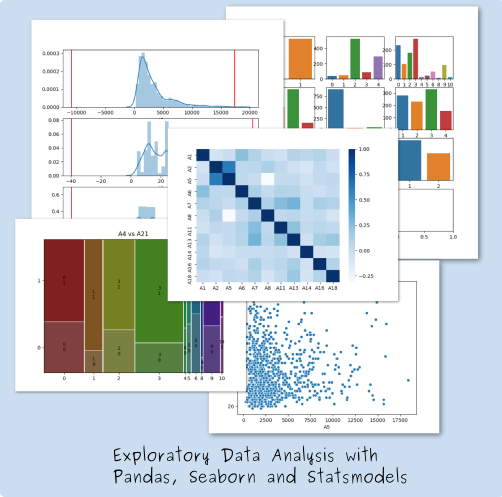
Exploratory Data Analysis Visualizations

Summary

This course is a CrashProgram (short course) introducing exploratory data analysis.

Prerequisites

The course can be pursued on a standalone basis. It is advisable to pursue the course after DAT31046 (Risk Data Review) which discusses a review of the data from a data quality validation perspective.

Risk Data Review

Reading Time: 1 min.
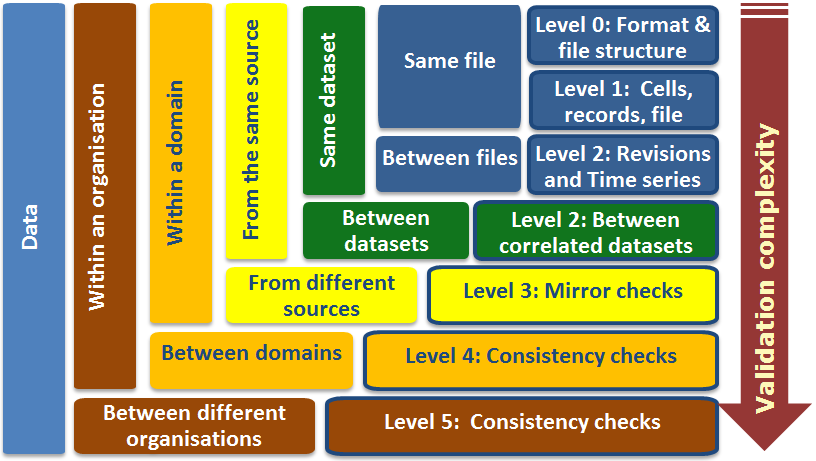
Different data validation levels as recommended by Eurostat

Summary

This course is a CrashProgram (short course) introducing the concept of a structured review of risk data.

Outcomes

Step by step we build the knowledge required to review the suitability of data for a given purpose and how to report the findings.

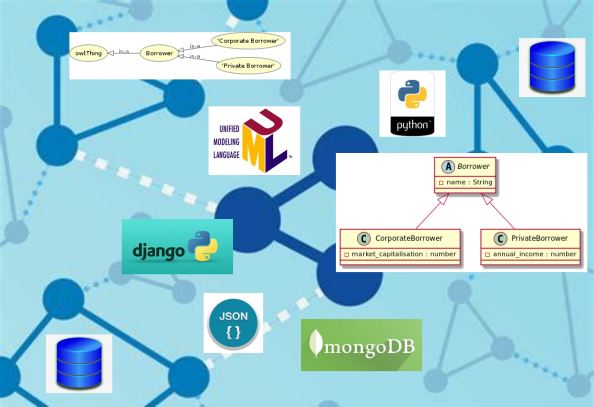
Class Inheritance in Data Science

Class Inheritance in Data Science

Object-oriented programming and techniques (OOP) such as using classes and inheritance are common in many application programming environments but don't travel well outside computer memory. When considering data science tasks and objectives the transition from object hierarchies to data structures (and vice versa) is not always straightforward. In this short course we explore how some programming languages, data formats, database API's and web frameworks handle hierarchical classes.

Reading Time: 3 min.

Summary

In this short course we explore how some programming languages, data formats, database API’s and web frameworks handle hierarchical classes.

Content

Object-oriented programming and techniques (OOP) such as using classes and inheritance are common in many application programming environments but alas don’t “travel well” outside computer memory. The potentially intricate relationships of objects (both the data they hold and the meaning and possible uses of the data) are not easy to transfer (except of-course by full replication of code and data). Hence when considering data science tasks and objectives that involving exchange of data, the transition from object hierarchies that live inside memory, to data structures that can be exchanged with another computer is not straightforward.