Introductory Level

Working with Large Matrices using Command Line Tools
Reading Time: 3 min.

Working with Large Matrices using Command Line Tools

CLI Tools for Data Science

This course is an Open Risk Academy CrashCourse introduction to using Linux command line tools to work (in particular) with large text files encoding numerical data in matrix format. A central role is played by awk, the venerable UNIX pattern-matching language and tool.

An Introduction to the Copernicus Satellite Data Ecosystem

Reading Time: 2 min.

Copernicus

Course Content:

This course is an introduction the Copernicus Satellite Data Ecosystem. It covers the following topics:

  • Getting to know the Copernicus Programme
    • Overview of the Copernicus Programme
    • Further Resources
  • The Copernicus Data Ecosystem
    • Copernicus Data Resources
  • Tools and Resources
    • Platforms, Tools and API’s
  • A worked out example
    • Using the Python OpenEO API

Who Is This Course For:

Data Scientists / Data Engineers in any Domain that need to use satellite data

Input-Output Model Interactivities

Reading Time: 1 min.

Introduction

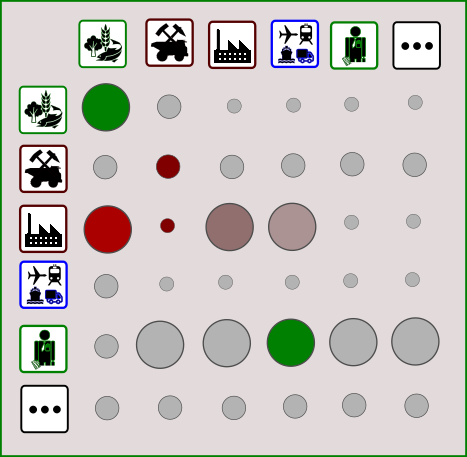
This is a short introductory course on Input-Output analysis that focuses on stylized interactive calculations that can be performed directly within the online reading sections.

The level of the course is introductory. There are no significant mathematical nor computer science prerequisites. The course should be useful for anybody wishing to obtain insights into the flow of the basic calculations behind modern large-scale Environmentally Extended Input-Output Models.

The Climate Dictionary Quiz

Reading Time: 0 min.
Graphic

Summary

A multipe-choice Quiz based on the Climate Dictionary developed by the United Nations Development Programme. The quiz provides an educational tool to enable deeper understanding of essential terminology around Climate Change and Climate Risk.

Content

The quiz consists of circa 65 questions of multiple choice type. The objective is to enable anybody interested in climate change to benchmark their knowledge of these key terms.

The Green Public Procurement Challenge (Online Game)

Reading Time: 0 min.
Graphic

The GPP challenge game is hosted in the sustainability.town, an online platform dedicated to hands-on demonstrations and applications of Sustainable Portfolio Management concepts and methodologies. It is part of a new series of serious games covering a wide range of important concepts in an engaging manner.

Course Level and Type

Introductory Level Core Level Advanced Level
Non-Technical GPP01079
Technical

Enroll and Get Started with GPP01079

Introduction to the Open Risk Manual

Reading Time: 0 min.

Summary

This short course is an introduction to the Open Risk Manual, covering the following topics:

  • Background Information
  • A Brief User Manual
  • More Advanced Uses
  • Mobile Use
  • Contributing to the Manual

Course Level and Type

Introductory Level Core Level Advanced Level
Non-Technical GEN13054
Technical

Enroll and Get Started with GEN13054

An overview of graph methods in data science

Reading Time: 1 min.
Python is the swiss knife of modern programming languages and a prime candidate to be also the swiss knife for risk modelling

Summary

This course is a CrashProgram (short course) introducing the different ways in which the graph concept enters various data science applications. The course is at an introductory technical level. It requires comfort with mathematical notation and (optionally) ability to run the provided python code with various graph examples. Reviewing the very diverse uses of graph structures will reveal the richness of graphs as data science tools.

Intro to Concentration Measurement using Python

Reading Time: 1 min.
Python is the swiss knife of modern programming languages and a prime candidate to be also the swiss knife for risk modelling

Summary

This course is a CrashProgram in the use of python for risk modelling purposes, in particular credit concentration measurement.

Who Is This Course For

There is little or no prior knowledge of concentration risk measurement but general background in credit risk management is useful for context.

Exploratory Risk Data Analysis

Reading Time: 1 min.
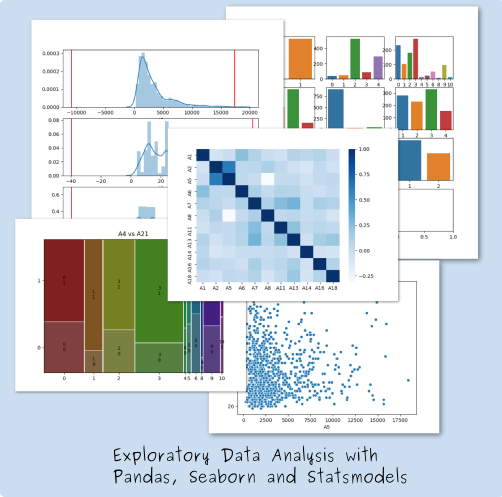
Exploratory Data Analysis Visualizations

Summary

This course is a CrashProgram (short course) introducing exploratory data analysis.

Prerequisites

The course can be pursued on a standalone basis. It is advisable to pursue the course after DAT31046 (Risk Data Review) which discusses a review of the data from a data quality validation perspective.

Getting Started with Open Source

Reading Time: 0 min.
Python is the swiss knife of modern programming languages and a prime candidate to be also the swiss knife for risk modelling

Summary

This course collects resources and activities to facilitate those involved in open source risk modelling projects.

Course Level and Type

Introductory Level Core Level Advanced Level
Non-Technical
Technical GEN13031

Enroll and Get Started with GEN13031

Risk Management Q&A

Reading Time: 0 min.
Python is the swiss knife of modern programming languages and a prime candidate to be also the swiss knife for risk modelling

Summary

A forum for risk management questions and answers. Nothing is too complicated or too simple!

Course Level and Type

Introductory Level Core Level Advanced Level
Non-Technical RMQ29035
Technical

Enroll and Get Started with RMQ29035

Intro to Credit Concentration

Reading Time: 0 min.
Visual representation of credit concentration diversification

Summary

This course is a Crash Program introduction to the topic of credit risk concentrations: how to identify, measure and manage excess credit exposure, an essential risk management discipline for any credit portfolio.

Content

The course covers the following topics:

Getting Started with the Open Risk Academy

Reading Time: 0 min.
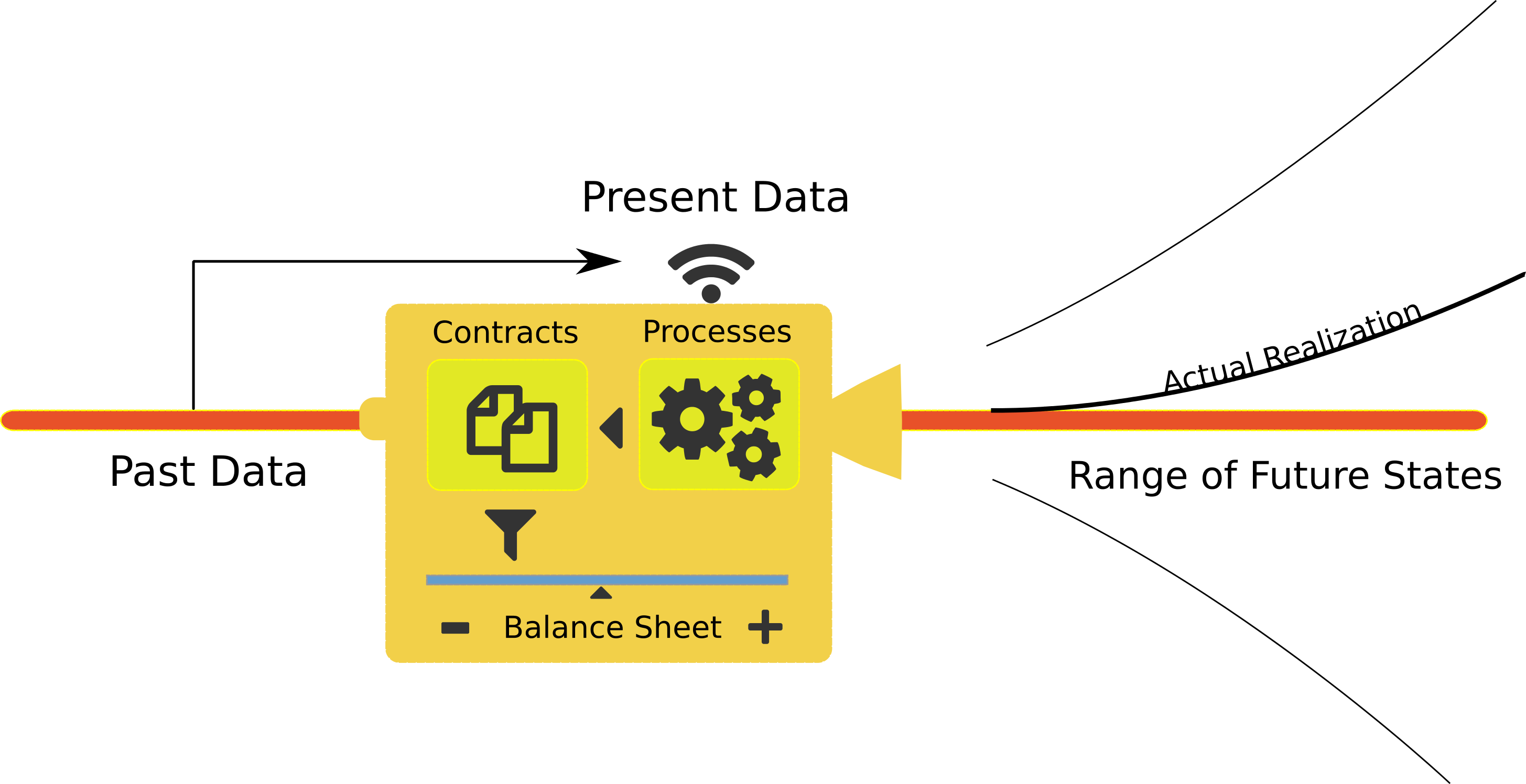
Representation of credit portfolio management as an information processing engine

Summary

If this is your first time in the Academy you can familiarize yourself by going through the Demo which includes manuals, study plan suggestions and more.

Requirements

The course is completely introductory and does not have any prerequisite except a clear and open mind!

Micro Course on Risk Management

Reading Time: 0 min.
Representation of credit portfolio management as an information processing engine

Summary

In the Shortest Possible Course on Risk Management we try to condense in 15 intense minutes the essence of risk management!

Requirements

The course is completely introductory and does not have any prerequisite except a clear and open mind!

The Puzzle of Money

Reading Time: 0 min.

Summary

A crossword puzzle around money topics to celebrate Global Money Week

Course Level and Type

Introductory Level Core Level Advanced Level
Non-Technical GEN13061
Technical

Enroll and Get Started with GEN13061

Discussion @ the Commons

Intro to GeoJSON

Reading Time: 1 min.
Geographical features on a map

Summary

This course is a CrashProgram (short course) introducing the GeoJSON specification for the encoding of geospatial features.

Course objectives

  • You will be able to confidently discuss the geojson standard
  • You will be able to dive into geojson related development projects with confidence

The course is live at the Open Risk Academy, this repository hosts the python scripts used in the course. The scripts can be used standalone but documentation is minimal.

Periodic Table of Risk

Reading Time: 0 min.

Summary

A visually pleasing logical decomposition of different risk types using the analogy of the periodic table. The app offers an interactive exploration of the risk profile of different business models

Course Level and Type

Introductory Level Core Level Advanced Level
Non-Technical PTR29042
Technical

Enroll and Get Started with PTR29042

Risk Data Review

Reading Time: 1 min.
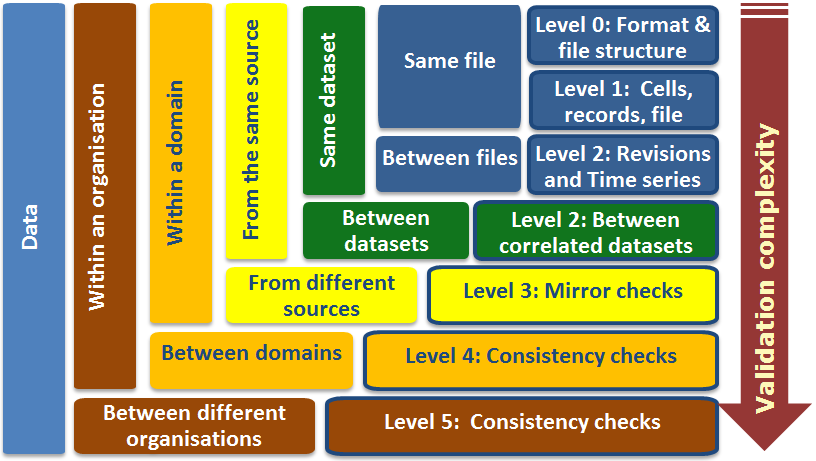
Different data validation levels as recommended by Eurostat

Summary

This course is a CrashProgram (short course) introducing the concept of a structured review of risk data.

Outcomes

Step by step we build the knowledge required to review the suitability of data for a given purpose and how to report the findings.

Introduction to the EBA NPL Templates

Introduction to the EBA NPL Templates

Reading Time: 3 min.

Summary

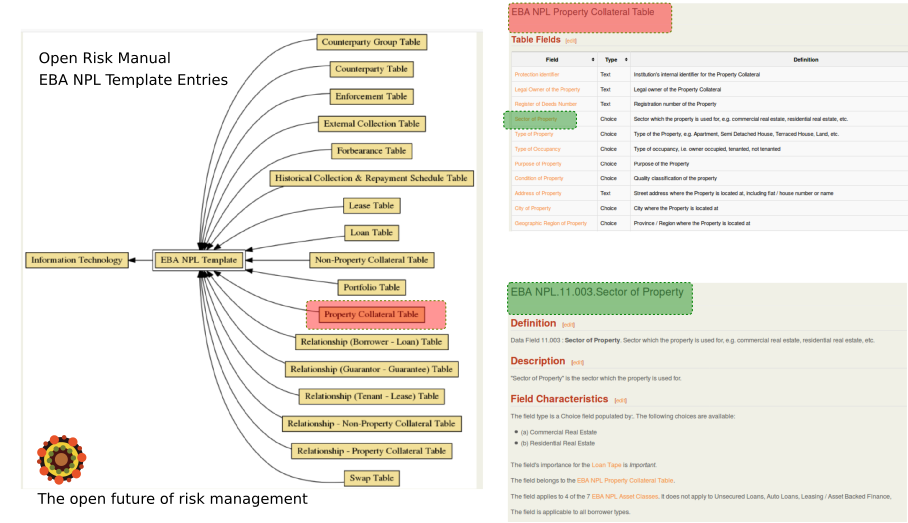
The Open Risk Academy course NPL270672 is a CrashCourse introducing the EBA NPL Templates.

Content

We start with the motivation for the templates and the domain of credit data (to which NPL data belongs). We discuss three core classes that capture the essence of lending operations from a lenders point of view (Counterparty, Loan, Collateral). Next we explore classes that capture events in the lending relationship lifecycle (which we term NPL Scenarios). We look into the main data types: elementary data types, choice lists, arrays and unstructured text. We close with discussing some more complex issues involving graph and timeseries data.