Core Level

Crash Course on Input-Output Model Mathematics
Reading Time: 1 min.
Graphic

Summary

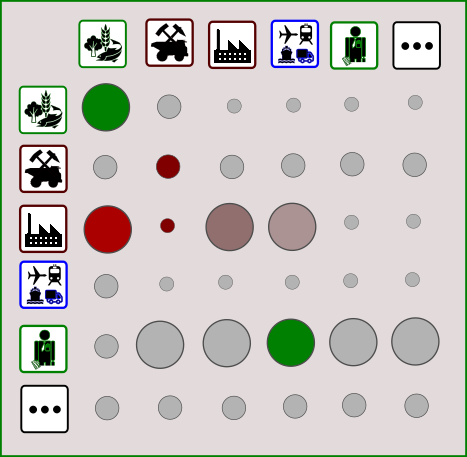
A brief review of the linear algebra and matrix theory concepts underpinning standard environmentally extended input-output models.

Content

This brief introduction in Input-Output Model mathematics discusses the basic elements of linear algebra that are necessary to understand the standard Input-Output models, including their Environmental impact extensions.

Matrix theory is the main subject covered here as it is the most dominant mathematical tool used in this area (though other parts of mathematics do find applications in Input-Output analysis). The focus is on the notation and mathematical objects commonly used, not the economic interpretation or any mathematical proofs.

Deep Dive Course on Tensor calculations with Eigen

Reading Time: 2 min.

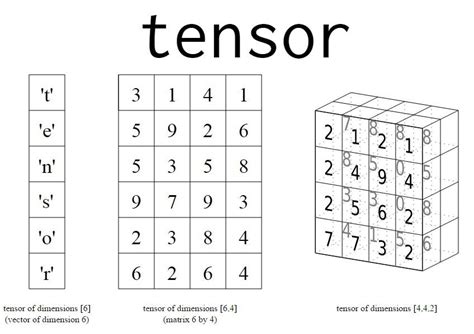
Tensor

Course Content:

This course is an introduction to Tensor calculations with Eigen, a popular C++ library for working with numerical arrays and linear algebra. It covers the following topics:

  • We learn the concept and techniques of the Eigen Tensor class
  • How to declare, initialize Tensors of various ranks and types and how to access Tensor elements
  • Elementary unary and binary operations involving Tensors
  • More complex operations (reductions, contractions)
  • Modifying the shape of Tensors

Who Is This Course For:

Developers in any Domain that need to use higher-dimensional numerical data containers

Academy CrashProgram Demo

Reading Time: 0 min.
Demo Course Logo

Summary

This crash course is an introduction to the main elements of an Academy course (it is a course about courses!). The course takes less than an hour to complete. It is recommended to new users that are not familiar with eLearning environments.

How Does The Course Help

You can also use the course to test whether your can get full access to the academy courses using your particular device / browser.

Crossword Puzzles

Reading Time: 0 min.

Summary

Open Risk Crossword Puzzles: A collection of crossword puzzles build around specific themes

Content

  • Non-Performing Loan Crossword Puzzle Game
  • Sustainable Finance Crossword Puzzle Game
  • Cyber Risk Crossword Puzzle Game
  • Fintech Crossword Puzzle

Course Level and Type

Introductory Level Core Level Advanced Level
Non-Technical QUI29052
Technical

Enroll and Get Started with QUI29052

21 Ways to Visualize a Timeseries

Reading Time: 3 min.

What this course is about (and what it isn’t)

With the ever more widespread adoption of Data Science tools (defined loosely as the intensive use of data in decision-making), there is strong interest in Visualization as an effective means for humans to understand information at various stages of the data lifecycle.

There is a large variety of open source data visualization tools which can produce an ever more bewildering variety of visualization types:

EU Financial Regulations Quiz

Reading Time: 0 min.

Summary

A quiz about financial regulation in the European Union. Test your knowledge about the diverse initiatives that are reshaping the financial landscape in Europe.

Course Level and Type

Introductory Level Core Level Advanced Level
Non-Technical QUI29049
Technical

Enroll and Get Started with QUI29049

Discussion @ the Commons

UK Pillar II

Reading Time: 0 min.
Visual representation of credit concentrations in a UK portfolio

Summary

This course is a DeepDive into the UK regulatory framework around credit risk concentrations and their treatment under Pillar II. The context is provided by Consultation Paper CP1/15 which establishes benchmark Pillar II capital add-on methodologies for all main credit concentration risk categories.

An introduction to Semantic Data with Python

Reading Time: 1 min.
Python is the swiss knife of modern programming languages and a prime candidate to be also the swiss knife for risk modelling

Summary

This course is a CrashProgram (short course) in the use of Python to work with Semantic Data (RDF / OWL)

Requirements

The course is at a medium technical level. It requires some familiarity with python (and a working installation). On the semantic data side it requires knowledge of basic concepts around files and representation formats for data.

Loan Level Templates Using Python

Reading Time: 0 min.
Python is the swiss knife of modern programming languages and a prime candidate to be also the swiss knife for risk modelling

Summary

This course is a CrashProgram in the use of python for credit portfolio modelling purposes, in particular working with data templates and spreadsheets.

Content

The course covers the following topics:

Basel on Credit Concentration Risk

Reading Time: 0 min.
Visual representation of different topic of credit concentration in a portfolio

Summary

This course is a 4 Session DeepDive into regulatory aspects around concentration risks in credit portfolios, focusing on compliance requirements of the Large Exposure Framework and the Pillar II.

Content

The course covers the following topics:

Credit Migrations using TransitionMatrix

Reading Time: 1 min.
Python is the swiss knife of modern programming languages and a prime candidate to be also the swiss knife for risk modelling

Summary

This course is a CrashProgram (short course) in the use of Python and the package TransitionMatrix for analysing credit migration data.

Requirements

The course is at a medium technical level. It requires some familiarity with python (and a working installation that includes the common numpy/scipy libraries). On the risk modelling side it requires knowledge of basic credit rating migration concepts.

Input-Output Models with Python

Reading Time: 1 min.
Graphic

Summary

This course is a DeepDive with nine segments, exploring Input-Output models using Python and the pymrio library. The course is at a core technical level. It requires working familiarity with Python, basic linear algebra and elements of economic systems. Step by step we explore how one can define and perform useful operations in Environmentally Extended Input-Output Analysis.

Managing Loan Portfolios Using MongoDB

Reading Time: 1 min.
Python is the swiss knife of modern programming languages and a prime candidate to be also the swiss knife for risk modelling

Summary

This course is a CrashProgram in the use of the MongoDB database in conjunction with Python for credit portfolio management purposes.

Content

The course covers the following topics:

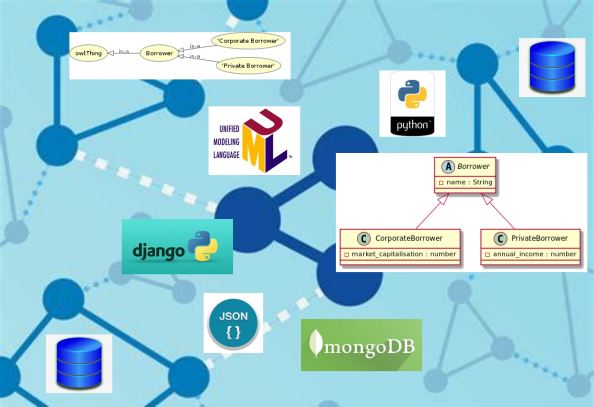
Class Inheritance in Data Science

Class Inheritance in Data Science

Object-oriented programming and techniques (OOP) such as using classes and inheritance are common in many application programming environments but don't travel well outside computer memory. When considering data science tasks and objectives the transition from object hierarchies to data structures (and vice versa) is not always straightforward. In this short course we explore how some programming languages, data formats, database API's and web frameworks handle hierarchical classes.

Reading Time: 3 min.

Summary

In this short course we explore how some programming languages, data formats, database API’s and web frameworks handle hierarchical classes.

Content

Object-oriented programming and techniques (OOP) such as using classes and inheritance are common in many application programming environments but alas don’t “travel well” outside computer memory. The potentially intricate relationships of objects (both the data they hold and the meaning and possible uses of the data) are not easy to transfer (except of-course by full replication of code and data). Hence when considering data science tasks and objectives that involving exchange of data, the transition from object hierarchies that live inside memory, to data structures that can be exchanged with another computer is not straightforward.